01
Home
A standalone page — no sub-sections.
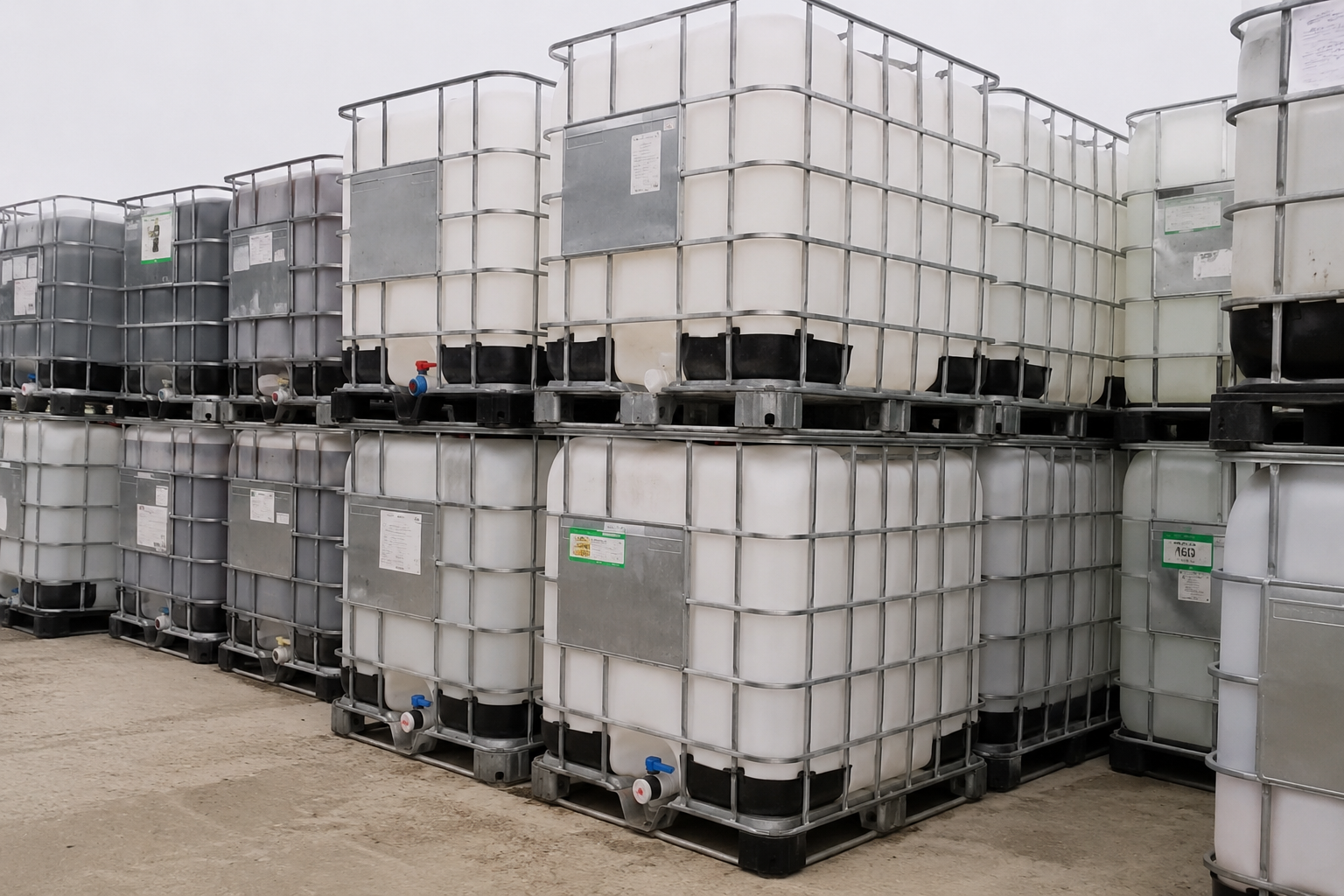
IBC Recycle USA is the un-warehouse: we don't make plastic, we keep it moving. We buy your empty 275 and 330 gallon IBC totes, wash, requalify, and re-circulate them — so the next industrial filler can avoid a virgin pallet. When a tank truly cannot be reused, we grind it into HDPE flake and route it back into the polymer stream. Nothing leaves the loop.
Buying, selling, or recycling — one form does it all. We answer within a business day.
Reconditioned, rebottled, or new — 275 and 330 gallon. From a single pallet to a full truckload.
We pay fair, fast, and pick up. Empties become someone else's first life.
When a tank truly cannot be reused, we grind, wash, and route the HDPE back into industry.
Pressure-test, requalify, recertify. Tanks ready for non-hazmat, hazmat, or food-grade duty.
Our own logistics partners run regional milk-runs so a single empty doesn't earn its own diesel.
Closed-loop, dedicated-fleet arrangements for high-volume generators. Audit-ready reporting.
Polyethylene kept in service instead of being landfilled or down-cycled.
Versus the virgin-resin footprint of the equivalent new container volume.
Reconditioned, requalified, and re-circulated since 2009.
We've maintained zero-landfill on incoming totes for eight straight years.
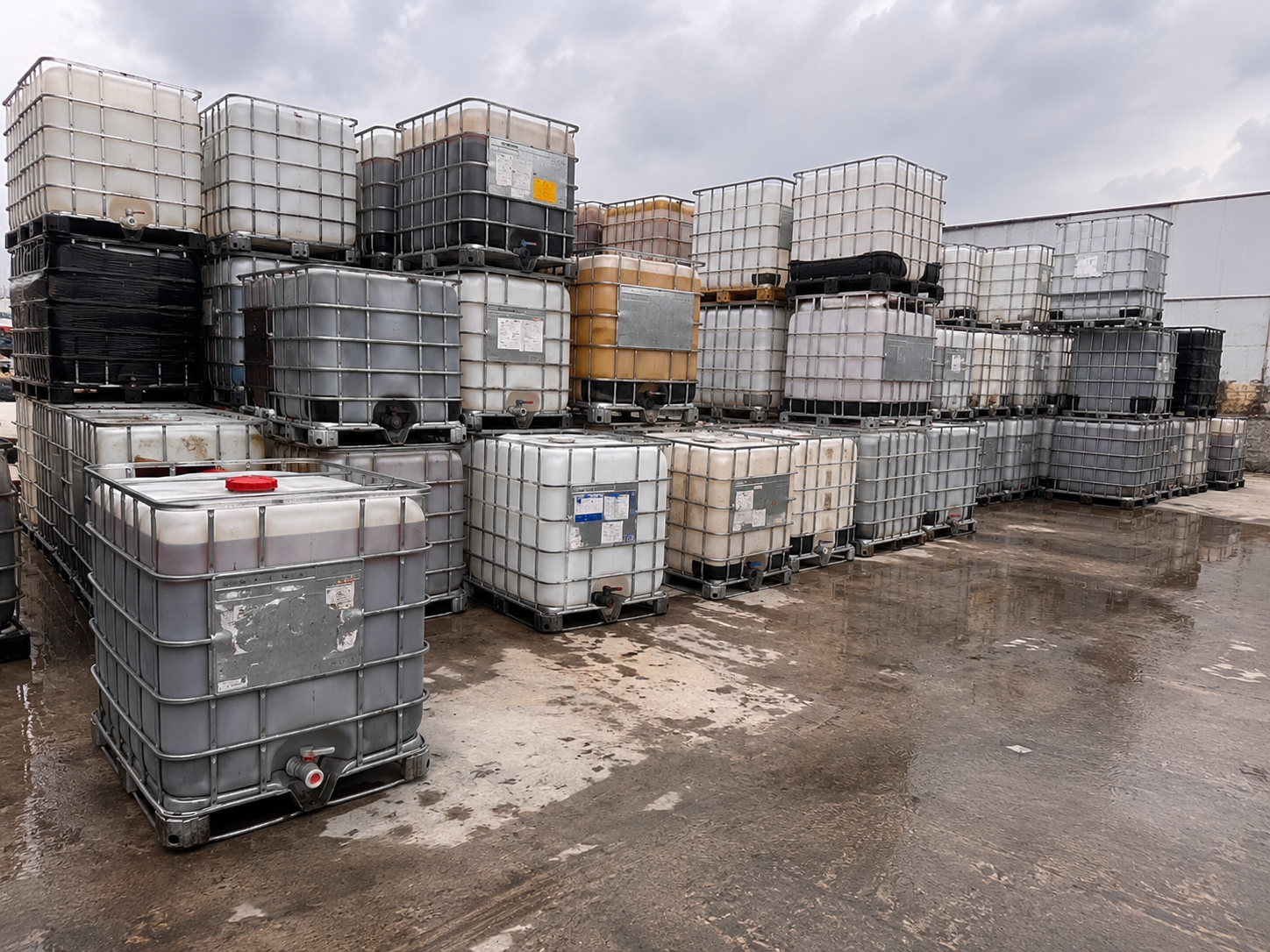
Every tank that goes through our wash line runs a recipe calibrated to its prior contents — surfactants, glycols, mild acids, oils each get a different sequence. Conductivity and pH checks confirm the rinse before the tank moves to pressure test.
Empties consolidated on regional milk-runs — one truck, many docks. Less diesel per tote.
Each unit graded under our Bottle / Wash / Rebottle / Recon scale. Nothing guesswork.
Hot caustic, neutralization, pressure test, leak test, sticker-strip, valve service, requalification.
Back out to a new filler with a new label — same tank, second (or third) life.
If the bottle can't take another fill, we strip the cage, grind the HDPE, sell the flake.
The same molded HDPE bottle, the same galvanized cage, the same valve — but now with proof it survived its first life. We've serviced tanks that have outlasted three labels and four owners. New plastic should be a last resort.
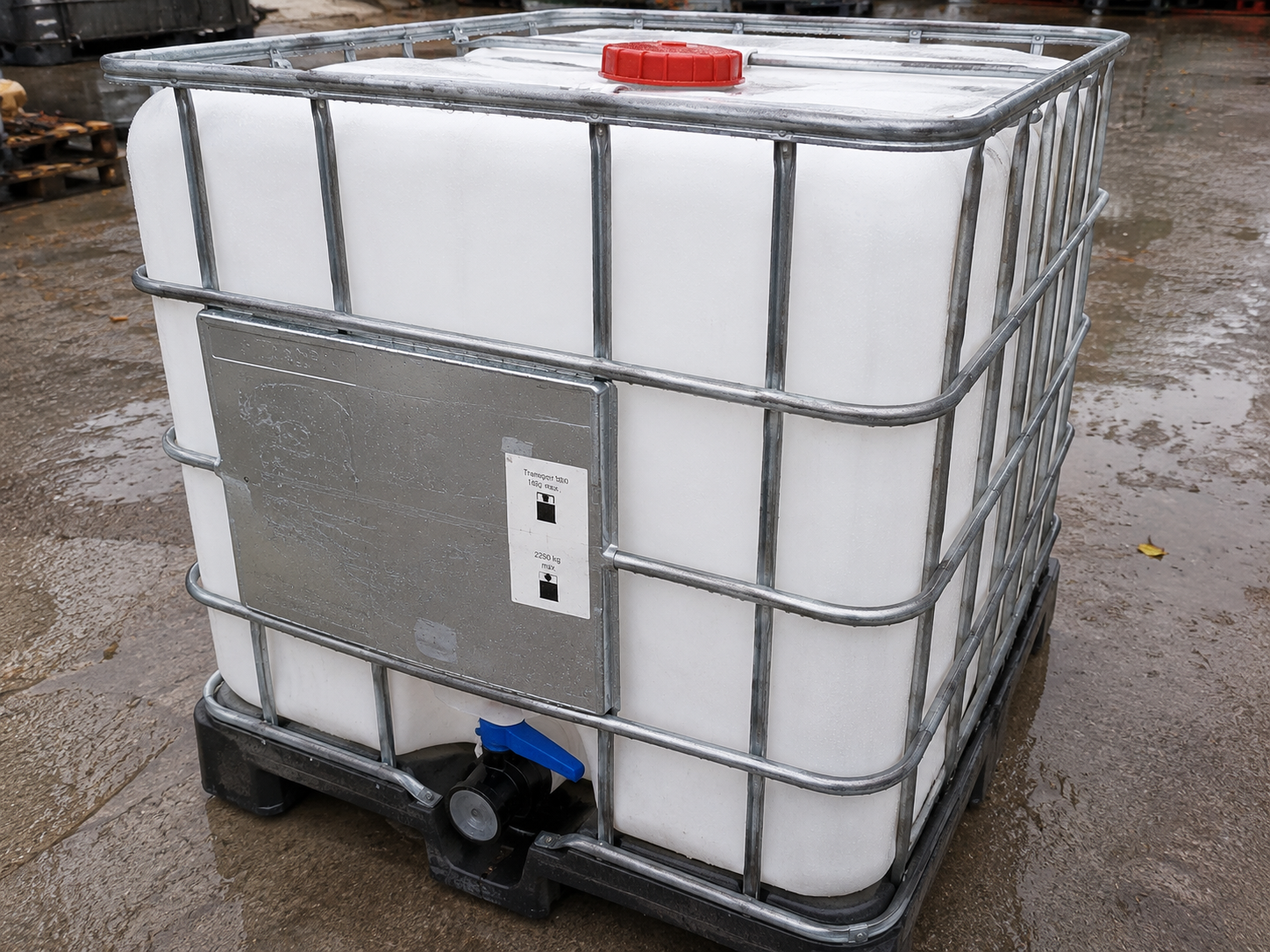
Every tank carries a physical grade card on the cage and a digital lot record in our system. The next filler knows what was in it before, how it was washed, and when it was last requalified.
Surfactants, lubricants, glycols.
Liquid fertilizers, micronutrients.
Syrups, oils, concentrates (food-grade only).
Concentrates and dilutables.
Acids, caustics, polymers.
Solvents and post-extraction storage.
Reuse beats recycling, every time. Recycling is a backstop — a tote that's been reconditioned ten times has displaced ten tons of virgin polymer. That's why the second life is the headline, not the safety net.
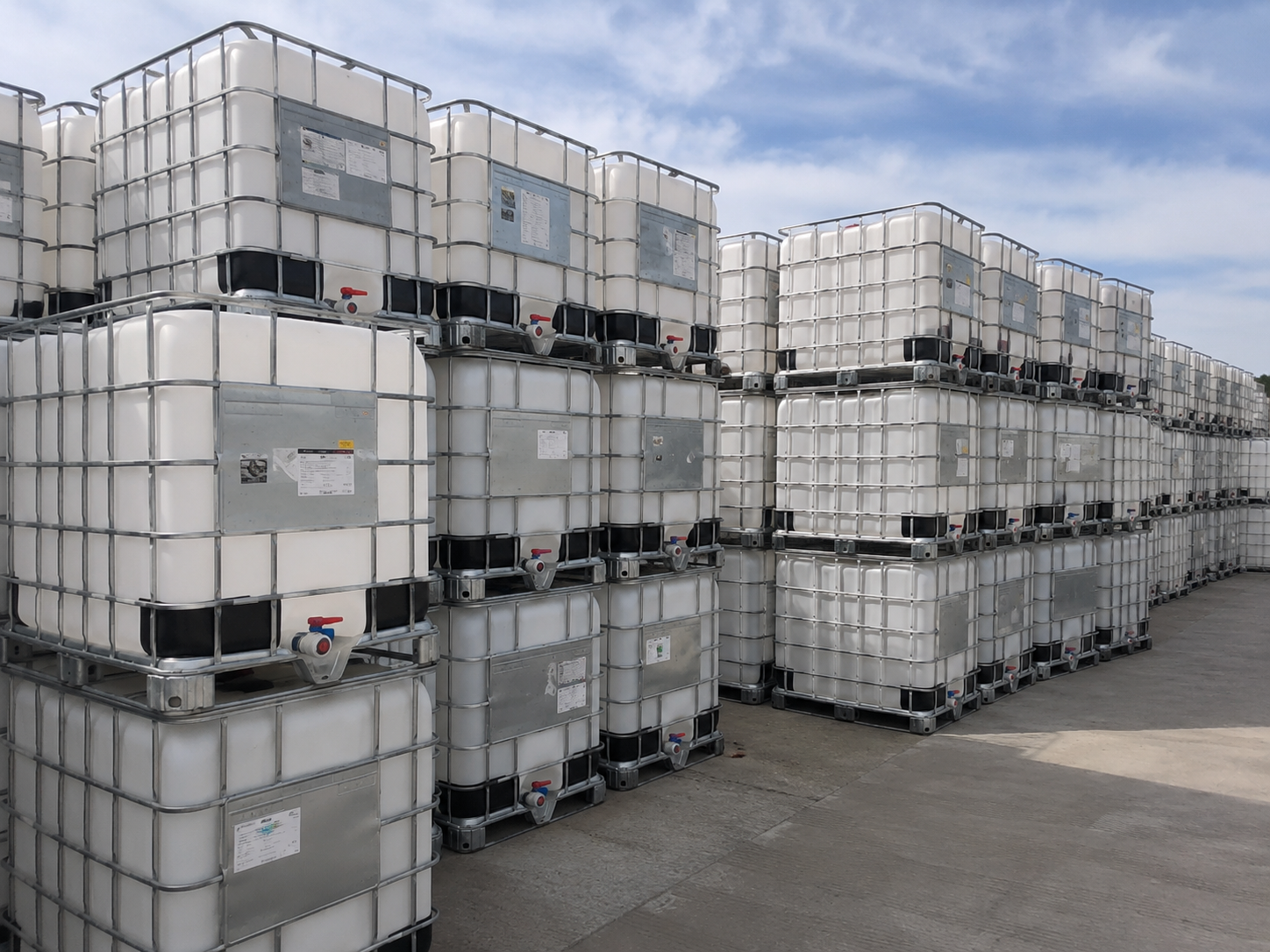
North American manufacturers consume roughly 5 million new IBC totes every year. Roughly 130 pounds of virgin high-density polyethylene per tank, roughly 28 pounds of galvanized steel, a pallet, and an industrial supply chain that touches three continents to put each one on a dock. Most of those tanks see a single industrial fill, get loaded with the next shipment of cleaner-of-the-month, drift downstream to a distributor, end up empty in a yard somewhere, and get baled to scrap because nobody routed them anywhere better.
That is the quiet ecological scandal at the center of bulk industrial packaging. The polymer is brand new. The use is brief. The next destination is a landfill or a low-grade flake mill. The carbon math is brutal — and almost completely avoidable. We are not preaching to a hostile audience; the industry knows this. It is just that the systems to actually keep those tanks in service have not historically existed at scale. Building that infrastructure — the consolidation lanes, the wash lines, the requalification documentation, the grade cards — is the work.
A lot of the "sustainable packaging" marketing in the bulk-container industry is performative. A new tank labeled as "made with 30% recycled HDPE" still required 70% virgin polymer, brand new molding energy, new freight from the molder to the filler, and a new pallet. A tank labeled as "recyclable at end of life" is technically true and ecologically irrelevant — almost nothing about being recyclable means it actually gets recycled.
What actually matters, in terms of measurable carbon and material outcomes, is whether the tank gets reused. A reconditioned tank that completes ten commercial fills over eight years has displaced approximately 2,940 kilograms of CO₂e versus the ten new tanks that would have otherwise been molded for the same product flow. No 30% recycled content claim comes anywhere near that number. The mathematics of reuse are linear and stark, and we run a business that lives or dies on whether we can get more tanks into more fill cycles before they age out.
High-density polyethylene is one of the cleanest waste streams in industrial plastics — a single, known polymer with a narrow processing window and very few additives at the IBC bottle level. It is also one of the most durable plastics in industrial use. A blow-molded HDPE bottle for an IBC is engineered for thousands of fill cycles. The polymer itself does not wear out from a single use, or even from twenty. What wears out is documentation, branding, residual color, and (eventually, after many years) the structural fatigue of the cage and bottle interaction.
That is why our business is structured around reconditioning first and recycling second. The polymer is too valuable, both economically and environmentally, to take out of service after a single industrial fill. Recycling HDPE is a fine last-resort — drainage tile, irrigation pipe, automotive interior trim, certain building products all run perfectly well on reclaimed flake — but a tank that gets ground into flake has only contributed three or four years to its potential service life. A tank that gets reused for ten years has contributed all of it.
Our 2024 audited results put the headline number at roughly 1,847 metric tons of HDPE diverted from landfill — the combined weight of the bottles in tanks that we reconditioned (1,612 metric tons) and tanks that reached end-of-life and went to our grind line for recovery (235 metric tons). Across the lower-48, that is enough virgin polymer to avoid roughly 9.6 million kilograms of carbon dioxide equivalent, using EPA WARM v15 conversion factors for source-reduced HDPE.
Those numbers feel abstract. Here is the more useful version: it is roughly the polymer equivalent of every plastic grocery bag used in Ohio for a year, kept out of the landfill stream and put back to work in industrial supply chains. We publish updated numbers annually on our sustainability page, with the methodology in plain English so anyone can sanity-check the math.
In some sectors the switch from new to reconditioned has already happened, quietly, over the past fifteen years. Three of those sectors account for more than 40% of our annual throughput. They figured out the math before most of the rest of the market.
Concentrated alkalis, surfactant blends, sanitizers. The chemistry is well-understood and HDPE-compatible. Buyers in this segment moved to reconditioned tanks before sustainability was a corporate talking point — they did it for the cost savings, and the carbon math was a bonus.
UAN, ammonium thiosulfate, micronutrient blends. Seasonal flow, predictable chemistry, short trip from blender to grower. Almost no virgin-tank consumption in this segment anymore at the cooperative and retail level.
Long-life products with documented compatibility. Many of these customers run dedicated closed-loop pools — the same tanks cycle through the system for a decade, with periodic reconditioning at predictable intervals.
Coagulants, flocculants, dechlorinators. Stable demand, regional distribution, predictable wash protocols. A natural fit for reconditioned units in the standard and food-grade lines.
Syrups, juice concentrates, edible oils, sweeteners. Food-grade reconditioned tanks (washed and documented to FDA standards) account for a meaningful share of our annual throughput, especially through Q3 and Q4.
Surfactant blends, glycerin, propylene glycol, plant oils. A quieter segment that tolerates reconditioned tanks much better than its procurement language suggests. Steadily growing as spec language modernizes.
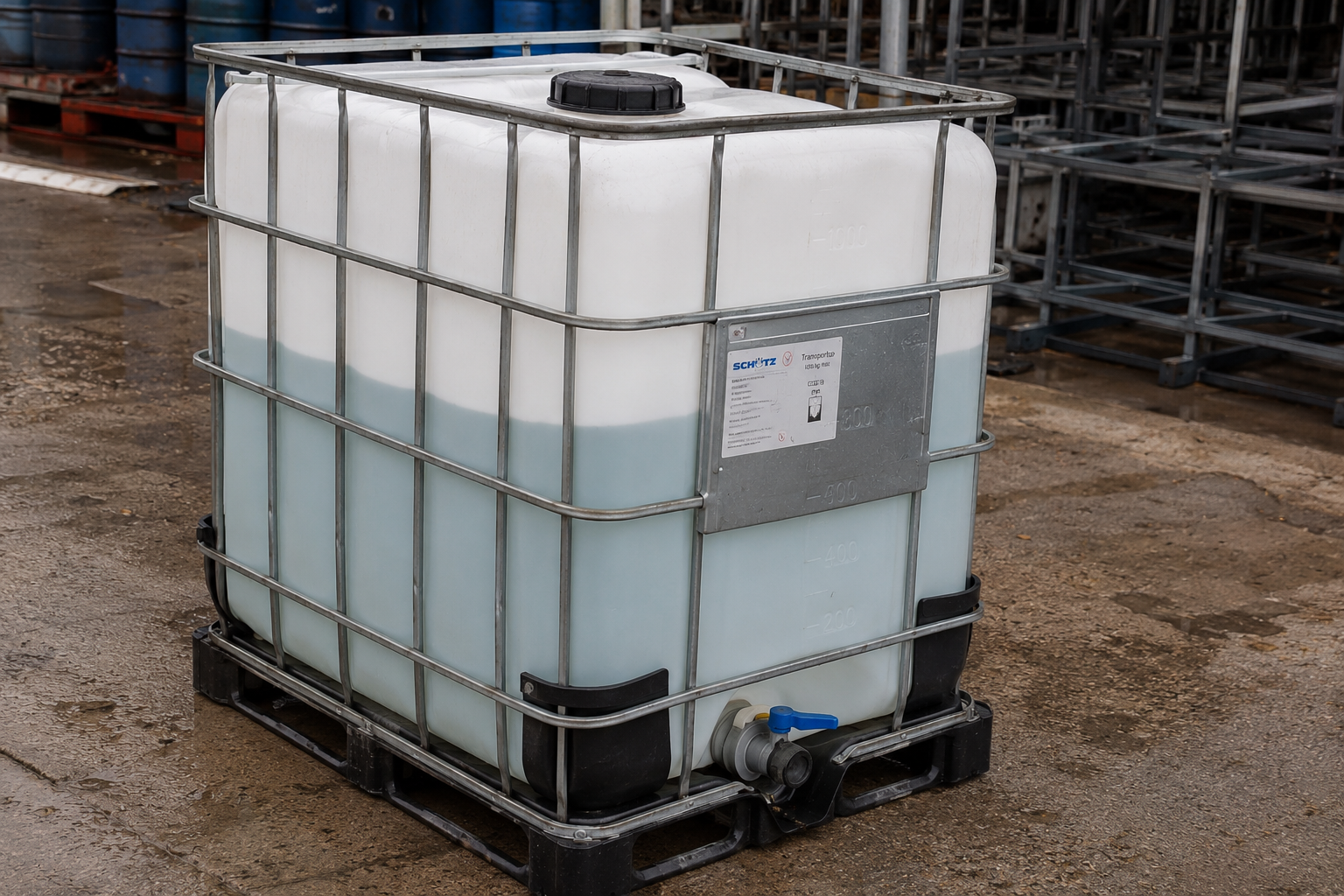 05 — Pickup
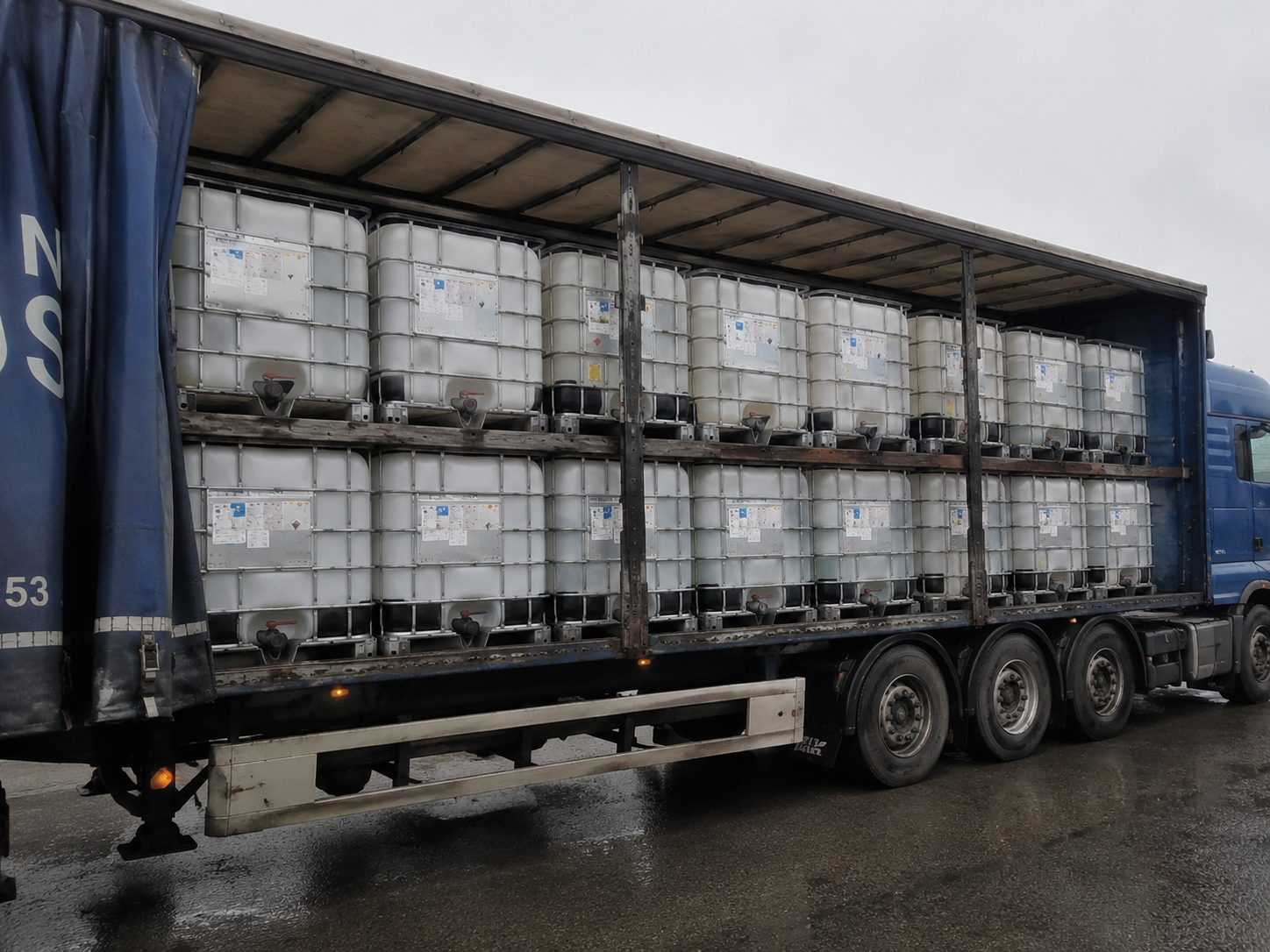 06 — Grade
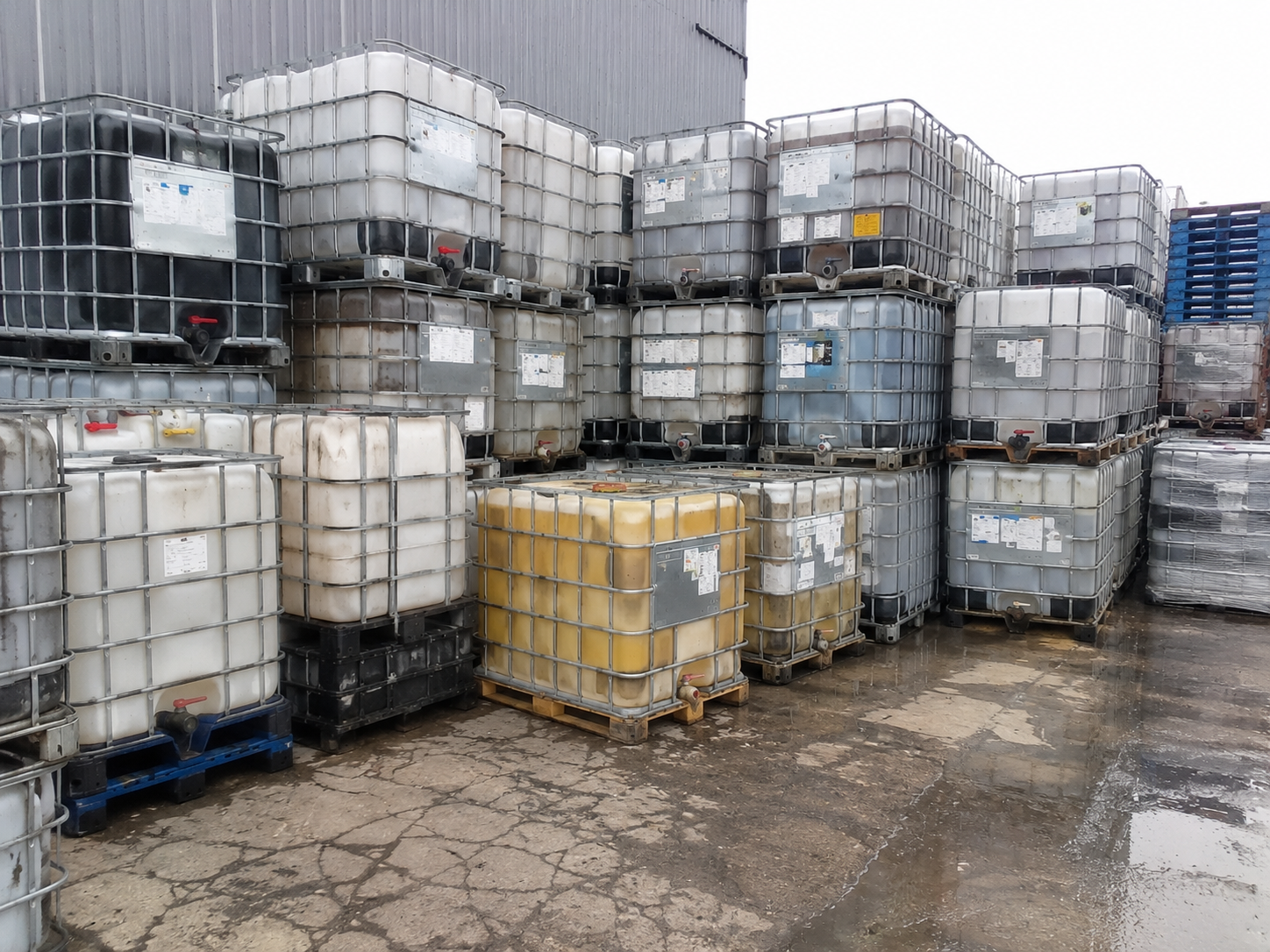 07 — Test
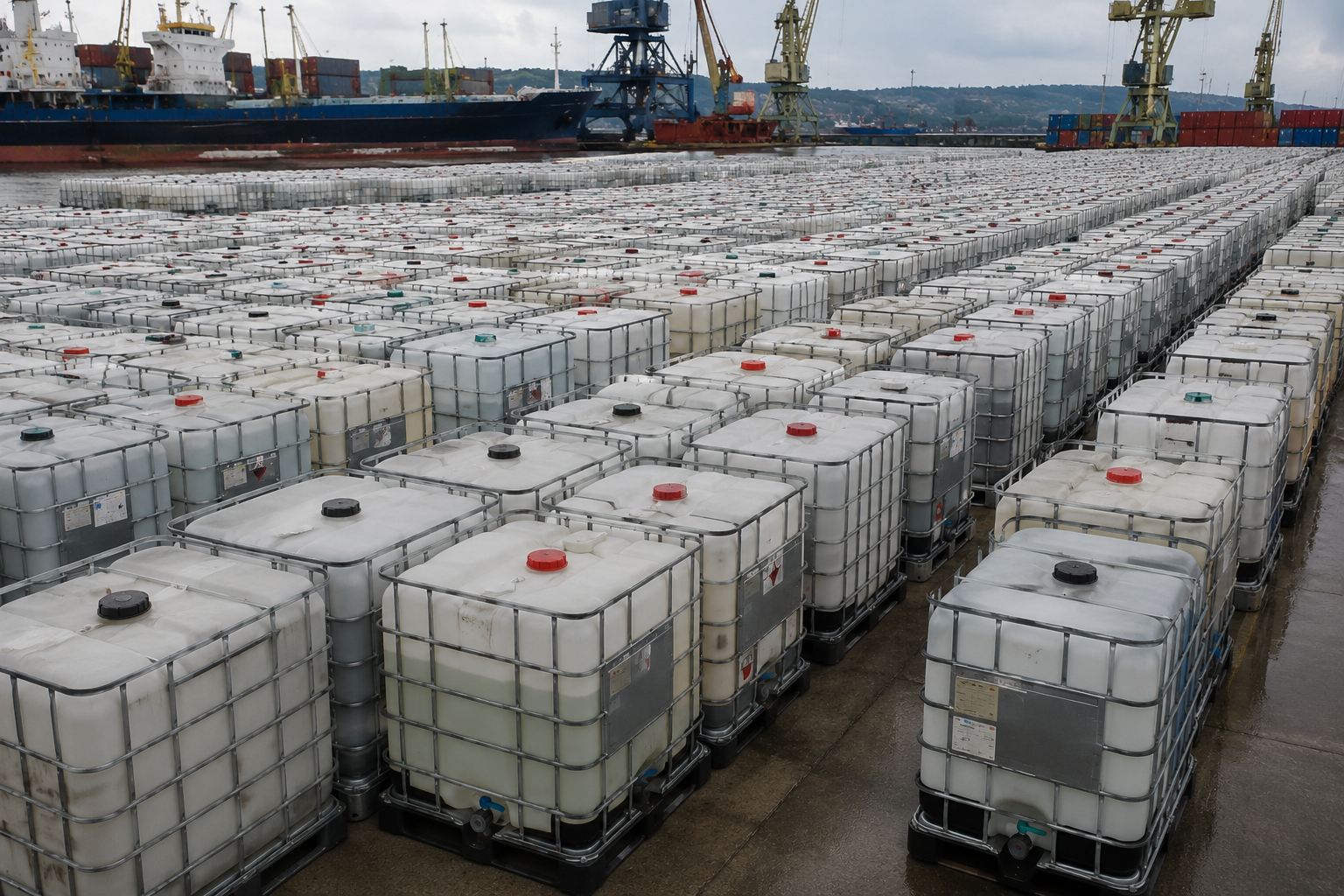 08 — Ship
We are not a configurator. There is no shopping cart on this website, and there will not be one. Bulk industrial containers are not a transaction you should make with a checkbox — the difference between "reconditioned" and "UN-requalified reconditioned for hazmat Packing Group II" matters for your shipping paperwork, your insurance, and your downstream customer relationships. Getting that right takes a five-line email exchange, and we set the company up around making those exchanges as fast and as accurate as possible.
You send us a request through the form on any page of this website (or the floating button at the bottom-right of every page). We ask for the basics: quantity, product type, grade if you know it, service category, ZIP code for the freight quote, and any message you want to send. The form takes about 60 seconds to fill out, and the server-side validation will tell you if anything looks wrong before it leaves your browser.
We respond within one business day, every business day. The reply is in writing (because IBC quotes are too detailed for the phone), and it contains: per-unit price, freight estimate to your ZIP, lead time, lot documentation note, and any clarifying questions if the original inquiry left ambiguity. Most quotes are turned around in three to six hours; complicated specifications can take a full business day.
Standard payment terms for established accounts are net 30. New accounts pay against proforma. Either way, your approval moves the order to scheduling — usually inside our inventory management system the same day you confirm.
We consolidate freight wherever possible — your shipment sharing a trailer with three or four other customers on the same lane. For full-truckload orders, we route direct truckload with one of our regional carrier partners. Either way, you receive a shipment notification with a tracking ID, a BOL preview, and an estimated arrival window.
Tanks arrive with their grade cards affixed, lot documentation already in your inbox for hazmat-eligible units, and (for closed-loop program customers) a confirmation of the next pickup cycle. After delivery, we close the loop on email — let us know how the receiving went, surface any issues, and route the next shipment's details if we are running on a recurring schedule.
We are not the largest IBC reconditioner in the United States. We are not the lowest price on every line. We are not the closest to every customer. What we are, by intent and over more than a decade of accumulated operating discipline, is one of the most reliable — and reliability in this industry has compounding economic value that the headline price-per-tank does not capture.
Same-day acknowledgment of every inquiry during business hours. One-business-day written quote for every request. Lot documentation for every hazmat-eligible unit shipped, available before the truck arrives at your dock. Grade card on every tank. Consolidated freight on every shipment we can. Recurring program reporting on a monthly cadence with no chase emails required.
We do not run a customer-service phone line. We never have. The decision is an operational one, not a cost-saving one — written exchanges produce better quotes, better orders, and faster turnarounds, and they create a paper trail that protects everyone. We answer every email within one business day, by a human who can see the full history of the conversation.
We run out of a single Dublin, Ohio facility. We have considered second locations several times and decided each time that the discipline of one facility, one team, and one quality standard outweighs the freight savings of regional sites. The result is that every tank that leaves our dock has been through the same process, graded by the same inspectors, washed under the same protocols.
Our top-10 customers by volume have all been with us for more than five years. Our top-25 for more than three. We do not advertise. The customers come from referrals inside their own industries, sustainability teams comparing notes at conferences, and the long-running email chains that build up when buyers know their quote will land before they get back from lunch.
We ship to all 48 contiguous U.S. states. Alaska, Hawaii, and Puerto Rico are quoted case by case because the freight economics are different enough that the standard program does not always make sense. Canadian shipments — most commonly to Ontario, Quebec, and Manitoba — are quoted with cross-border documentation included.
Ohio, Indiana, Michigan, Illinois, Kentucky, Pennsylvania, West Virginia, and Tennessee see daily or near-daily consolidated freight. Mid-week lanes through the Mid-Atlantic (PA, VA, NC, SC, MD, DE) and the upper Midwest (WI, MN, IA) typically operate two to three times per week.
The Southeast (GA, FL, AL, MS, LA), the Mid-South (TX, OK, AR, MO), and the West Coast (CA, OR, WA, NV) typically operate on weekly consolidation cycles. Lead times are slightly longer; per-unit freight is usually higher than the daily lanes but still well below direct-truckload rates.
The Mountain West (CO, UT, AZ, NM, ID, MT, WY) and the upper-Plains (ND, SD, NE) operate on two-week consolidation cycles. Customers with tight timelines in these regions should call that out on the inquiry form; we can sometimes route via direct truckload at a reasonable cost.
What sizes of IBC totes do you handle? Primarily 275 and 330 gallon HDPE totes in caged plastic, plus stainless and carbon-steel caged totes. We buy, sell, recondition, and recycle all of them.
Do you buy empty IBC totes? Yes — nationwide. Send us your tote count, prior contents (SDS), and pickup location and we return a written buyback quote within one business day.
Is a reconditioned tote as good as a new one? For most industrial fills, yes. Every reconditioned unit is hot-washed, pressure-tested, and (for UN grades) requalified per 49 CFR § 178.801 with lot documentation.
Where do you ship? All 48 contiguous states from our Dublin, Ohio facility, plus Ontario, Quebec, and Manitoba with cross-border documentation. Alaska, Hawaii, and Puerto Rico are quoted case by case.
How do I get a quote — is there a phone line? We work by written exchange, not phone. Use any form on the site with your requirement and ZIP; we reply within one business day with pricing and freight.