01
Home
A standalone page — no sub-sections.
IBC Recycle USA was founded on a simple observation: a 275-gallon polyethylene tote takes weeks to mold and minutes to discard. We've spent over a decade rerouting that mistake — buying, reconditioning, and re-circulating intermediate bulk containers from a hub in Dublin, Ohio.
Tell us what you need or what you have. We respond within one business day, every business day.
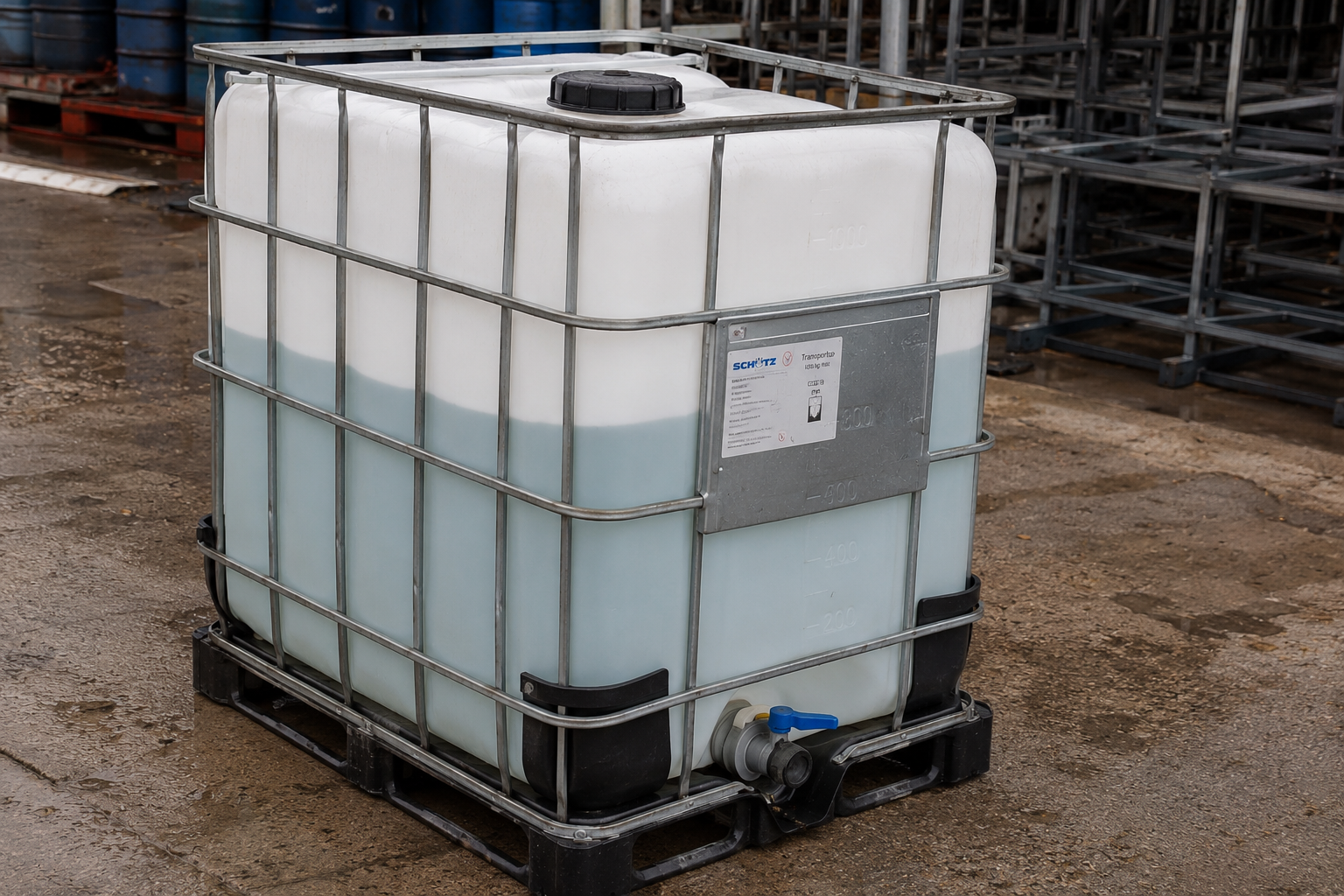
Most packaging companies think of an IBC the way most of us think of a coffee cup: single-use, replaceable, somebody else's problem. We don't. A 275-gallon HDPE container costs roughly 130 lbs of virgin polymer, a galvanized steel cage, and a hardwood or steel pallet. Build it once, and there's no good environmental argument for building it again next year.
Our entire business is a refusal to build it again. We buy back empties, we wash and requalify them, we test the bottle for hairline leaks, we re-cage what needs re-caging — and we send the tank back out for another three to ten years of working life. When the bottle is finally beyond requalification, we grind it down to flake and sell that flake to molders who will turn it into something else with a long life ahead of it: drainage tile, pallet stock, automotive components.
Three pages cover the parts of this story most people ask about: how we got started, what we're trying to do, and the environmental math that backs it up.
Two decades inside the IBC circular economy — from a single warehouse to a regional network.
What we mean by "closed-loop" — and why we won't mold virgin plastic for jobs a reused tote can do.
The tonnage, the CO₂e math, and the audits behind our zero-landfill claim.
We have been in the IBC reconditioning business long enough to have seen the industry go through three different consolidations, four different EPA regulatory updates, and roughly twenty different waves of corporate sustainability fashion. Through all of it, our operating principle has been the same: a reconditioned tank that goes back into service displaces a new tank that did not need to be molded. Everything else — the freight network, the wash chemistry, the grading system, the closed-loop programs — is downstream of that one commitment.
We buy empty IBC totes from generators across the lower 48. We grade, wash, requalify, and re-circulate the units that can take another commercial life. We grind the units that cannot. We run dedicated closed-loop programs for high-volume customers who want a single accountable partner across the full lifecycle of their packaging fleet. We publish the carbon math behind it every year, audited every other year, with the methodology written out in plain English so customers can sanity-check our claims against their own sustainability accounting.
We will not mold or resell virgin HDPE intermediate bulk containers for short-trip applications where a graded reused unit is suitable. We will not ship a tote whose grade card cannot be produced and stood behind in writing. We will not claim "zero landfill" in any quarter where our actual landfill weight on incoming tanks is greater than zero. We do not sell to brokers who will resell our tanks without provenance, and we do not buy from brokers who cannot document where their inventory came from.
IBC Recycle USA employs roughly forty people across operations, logistics, sales, and accounting at our Dublin, Ohio facility. The founder still walks the floor every morning. Our operations director has been with the company since the second warehouse lease in 2011. Our wash line foreman wrote half of the wash protocols we still use. We are not a startup; we are not a holding-company portfolio asset. We are a quietly profitable industrial services business with a culture of doing one thing well.
Slowly, almost always from referrals, and almost always for cultural fit before technical fit. The technical skills required to grade an IBC, run a wash line, or dispatch a regional truck network can be learned in months. The judgement required to refuse a tank that does not belong on the line — even when accepting it would hit the day's revenue number — takes years to develop and cannot be hired in from outside the industry on a six-month timeline.
Most decisions get made on the floor by people who have been here for years and understand the implications. We do not run a heavy approval matrix. The exceptions — new closed-loop program structures, equipment investments above a threshold, hiring — go through a small group of operating leadership. The result is a company that moves quickly without skimming on accuracy.
We carry the certifications and audit relationships our customers' sustainability and compliance teams expect. The headline items:
We are not ISO 14001 certified — a deliberate choice. The certification process at our scale would cost more than it would yield in customer value, and our customers have generally accepted our own environmental reporting and third-party audit relationships as sufficient. We revisit this decision every few years.
A handful of long-running operating partnerships sit at the back of how we deliver for customers: