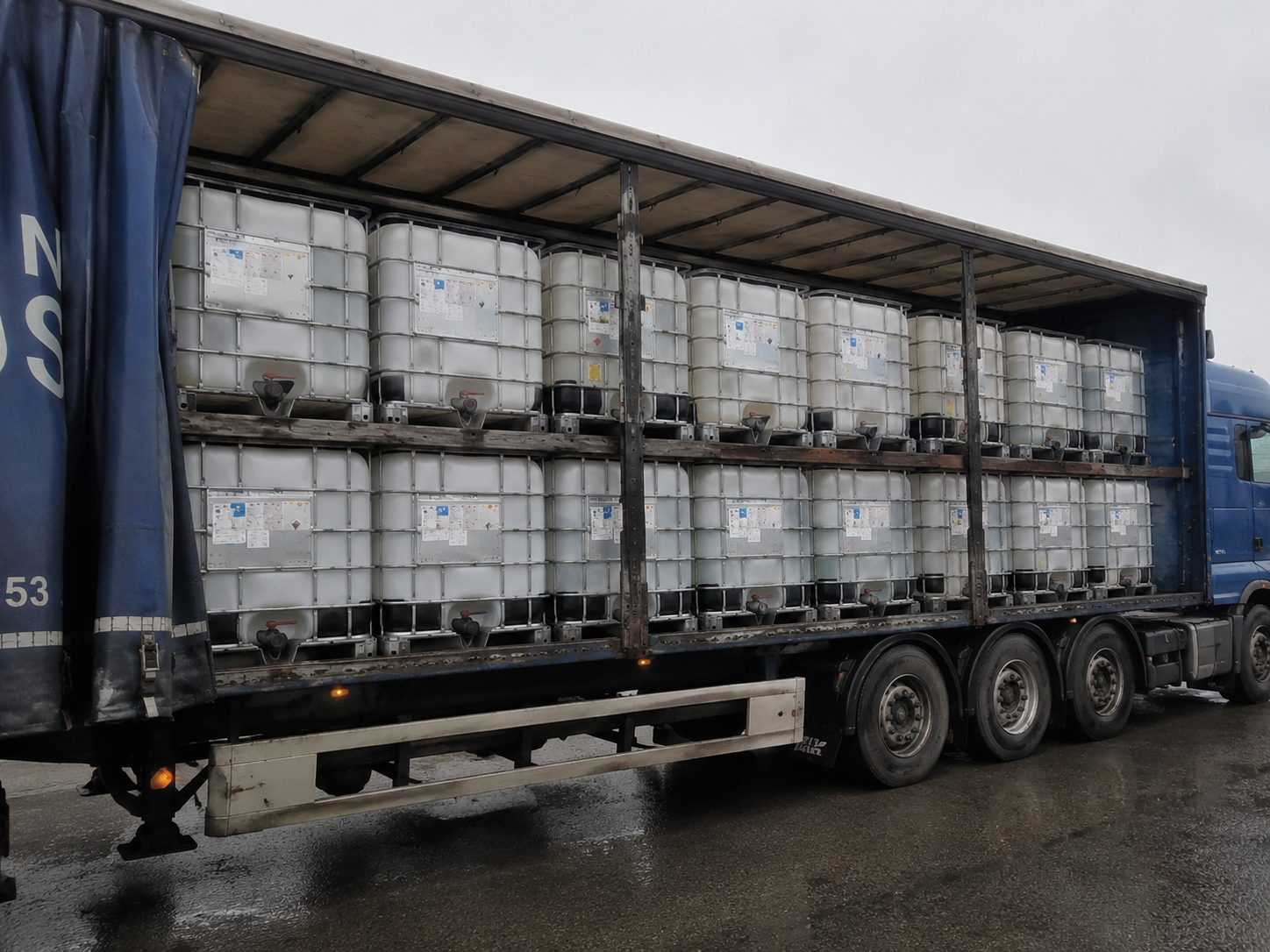
Why we maintain a resources library.
The IBC reconditioning industry is opaque by tradition. Spec language is decades old, regulations are written in alphabet soup, and most procurement teams do not have a deep understanding of how their packaging supply chain actually works. We have made it a priority to write down — clearly, in public — what we have learned.
What you will find here
- The blog — 34+ long-form posts covering regulations, sustainability math, case studies, operations notes, and the occasional industry critique.
- The FAQ — 30+ questions buyers actually ask, with substantive answers.
- The grading system explainer — full acceptance criteria for each grade, written down so customers can verify what they are receiving.
- Industries we serve — deeper context on the segments we work in and how we serve them.
What we are working on adding
- A glossary of common IBC industry terms.
- A specification-template library for procurement teams who want to update their language.
- Quarterly market commentary on polymer pricing and capacity trends.
- Customer story write-ups (with permission) of programs that have produced notable results.
If there is a topic you wish we had written about, tell us. Many of our most-read posts started as customer questions that came up often enough to be worth a full write-up.
A short glossary of IBC industry terms.
The vocabulary in this segment can be opaque. Here are the terms that come up most often.
- IBC. Intermediate Bulk Container — a generic term for the 275-gallon-class containers most commonly seen on industrial loading docks.
- Tote. Same as IBC; vernacular usage. "A tote" almost always means an IBC.
- HDPE. High-density polyethylene — the polymer used for almost all blow-molded IBC bottles.
- Bottle. The interior polymer container; distinguished from the cage.
- Cage. The galvanized steel framework that holds the bottle, sits on the pallet, and carries most of the cage-rated load.
- UN31HA1/Y. The UN marking on most U.S. HDPE IBCs, indicating rigid plastics IBC certified for hazmat Packing Group II/III liquids.
- Reconditioning. Wash + requalification + valve service + grade card, with documented lot history.
- Requalification. The specific regulatory process (per 49 CFR § 178.801) that re-certifies an IBC for continued hazmat service.
- Rebottle. An original cage and pallet fitted with a new HDPE bottle.
- Bottle Tight. Lowest grade — visually inspected and leak-tested but not washed.
- Wash. Mid-tier grade — washed but not formally UN-requalified.
- NANP. North American Numbering Plan — the phone number format used in the US and Canada.
- WARM. The EPA Waste Reduction Model — the default U.S. tool for converting material diversion into CO₂e equivalents.
- Closed-loop. A program structure where the same tanks cycle repeatedly between producer, customer, and reconditioner, instead of being purchased new each time.