01
Home
A standalone page — no sub-sections.
We run consolidated regional milk-runs so a single empty tote doesn't earn its own diesel. Lower carbon, lower freight, fewer headaches on your dock.
Tell us what you need or what you have. We respond within one business day, every business day.
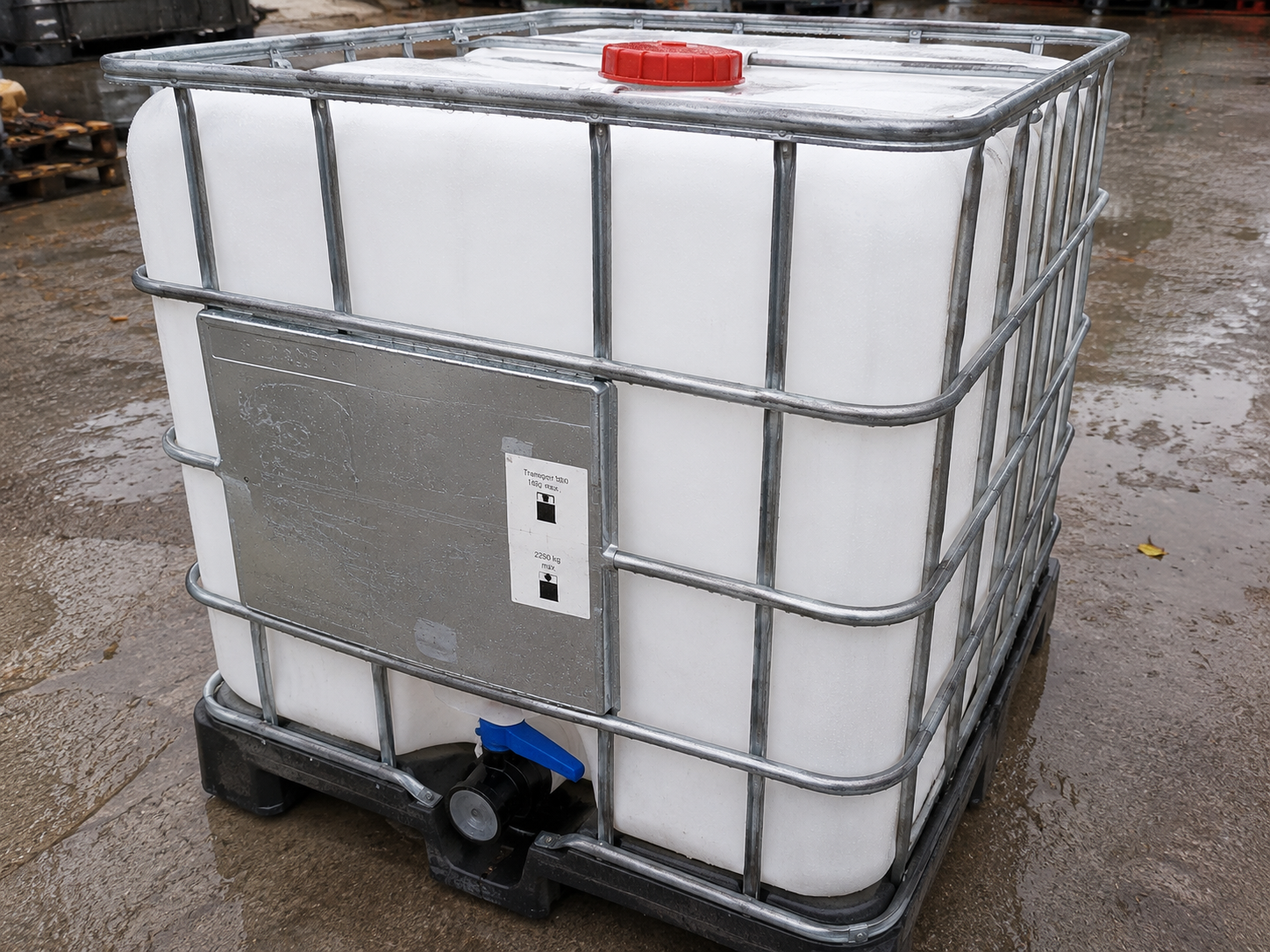
Daily lanes through the Midwest (OH, IN, IL, MI, KY, WI). Weekly through the Mid-Atlantic, Southeast, Texas, and Pacific Northwest. The Mountain West runs on two-week consolidation cycles — call out longer leads on the form if your timeline is tight.
Every pickup and delivery comes with a BOL, manifest, and (for customers running sustainability reporting) a diversion certificate quantifying the tonnage of HDPE kept in service or routed to flake.
| Region | Cadence | Lead time to pickup |
|---|---|---|
| Ohio (OH) | Daily | 1–2 business days |
| Indiana, Michigan, Kentucky, West Virginia | Daily | 2–3 business days |
| Illinois, Pennsylvania, Tennessee | 3–4× per week | 3–5 business days |
| Wisconsin, Minnesota, Iowa, Missouri | 2–3× per week | 4–6 business days |
| Virginia, North Carolina, Maryland, Delaware | 2× per week | 5–7 business days |
| Georgia, Alabama, South Carolina, Florida (north) | Weekly | 5–9 business days |
| Texas, Oklahoma, Arkansas, Louisiana | Weekly | 6–10 business days |
| California, Oregon, Washington, Nevada | Weekly | 7–12 business days |
| Colorado, Utah, Arizona, New Mexico | Bi-weekly | 10–14 business days |
| Mountain plains (MT, WY, ND, SD, NE) | Bi-weekly | 12–16 business days |
| Northern New England (ME, NH, VT, NY-upstate) | Weekly | 7–10 business days |
| Southern Canada (ON, QC, MB) | 2× per week | 6–10 business days |
For shipments to Ontario, Quebec, and Manitoba — our primary Canadian destinations — we handle the customs documentation as part of the standard shipment workflow. The additional paperwork: customs invoice (CCI), B3 form for customs clearance, and any relevant Canadian regulatory documentation for the chemistry class. Add 2–3 business days to the standard lead time for cross-border shipments.
Cross-border pricing carries a modest premium over equivalent U.S. domestic shipments — typically $50–$150 per shipment for clearance and documentation overhead — but the per-tote freight remains competitive on consolidated lanes.
For hazmat-class shipments, we route through DOT-authorized carriers on dedicated hazmat lanes. Empty IBC pickups generally do not classify as hazmat if the tanks are drained to residual zero before pickup; loaded shipments of UN-rated reconditioned tanks ship with full hazmat documentation as required.
Drivers on our hazmat lanes are hazmat-endorsed; tractor-trailer combinations are equipped for placarding. We do not commingle hazmat freight with non-hazmat consolidated loads.
Successful pickups depend on the receiving dock being ready when the carrier arrives. Standard dock requirements:
Can you handle expedited or hot-shot freight? Yes, on direct truckload basis. Premium over consolidated rates; quoted bespoke.
What if my dock is closed on the scheduled pickup day? We will reschedule. Heads-up of 24–48 hours preferred to avoid driver dwell charges.
Do you cover insurance on freight in transit? Yes, via standard carrier insurance to specified limits. Additional coverage available on request.
Are there carbon-emissions reports available for our shipments? Yes — closed-loop program customers receive monthly reports including per-shipment transport emissions; one-time customers can request a per-shipment estimate.
Can I use my own carrier? Yes, but you forfeit the consolidation savings. We can quote both options for comparison.
A single direct truck from Dublin to Chicago for ten tanks burns roughly 95 gallons of diesel over the round trip. The same truck consolidated with three other customers, carrying 80 tanks total, burns roughly the same fuel — meaning the per-tank diesel footprint drops from 9.5 gallons to 1.2 gallons.
Across our full annual throughput, the consolidation discipline reduces total transport-attributable carbon by an estimated 40% compared to a direct-truck-per-order model. That benefit shows up in the per-tank reconditioning carbon math (we count ~7 kg CO₂e share-of-load freight, not the 35+ kg a single-customer direct truck would require) and ultimately in the customer's sustainability accounting.