01
Home
A standalone page — no sub-sections.
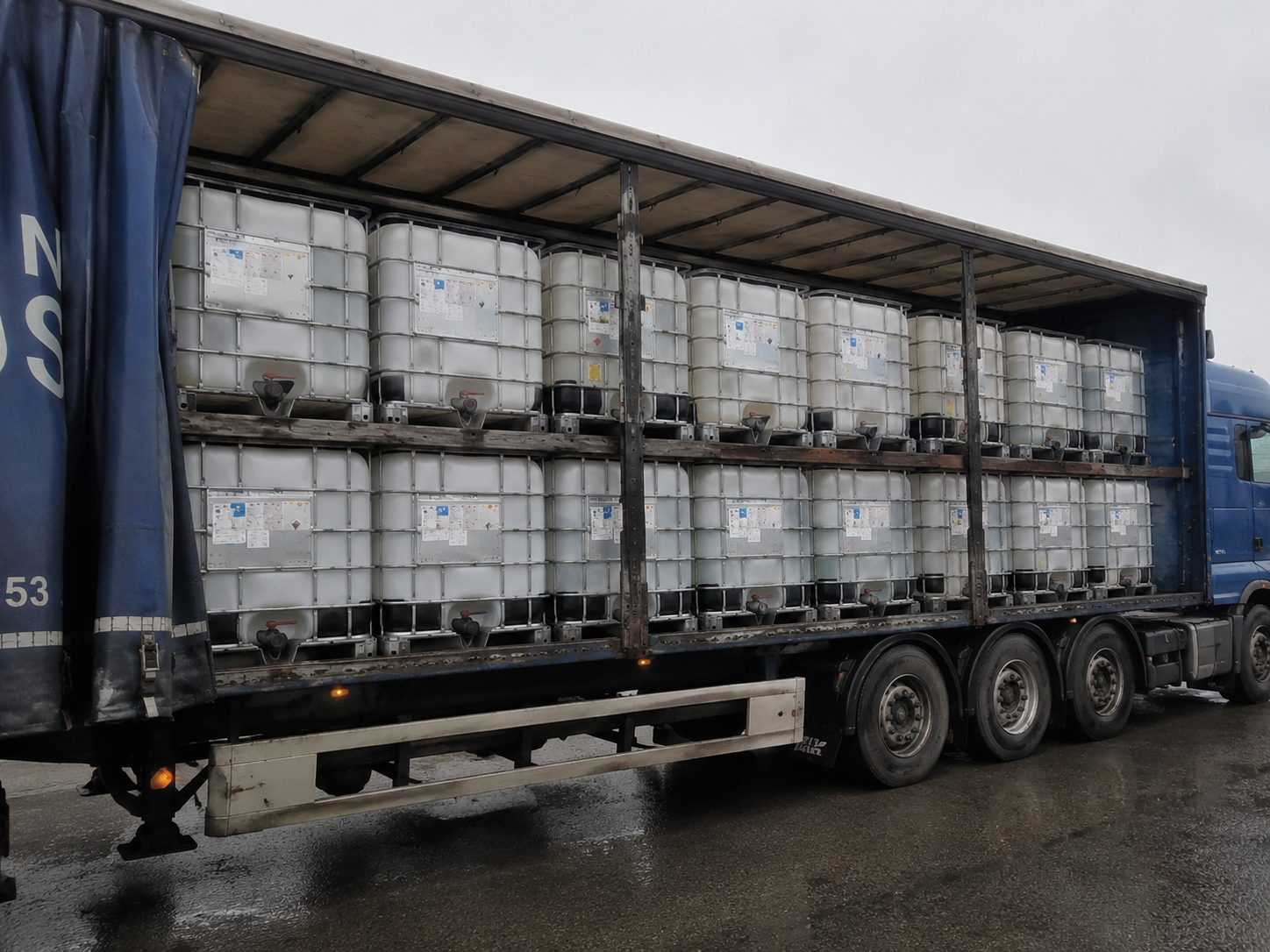
Every used IBC vendor has a grading system. Most are vague. Ours is short, specific, and written on the grade card affixed to every tote we ship.
Tell us what you need or what you have. We respond within one business day, every business day.
| Grade | What we did to it | Typical use | UN-eligible? |
|---|---|---|---|
| Bottle Tight | Visual inspection, leak test, sticker removal. No interior wash. | Non-hazardous, non-regulated dry or solid storage; rainwater capture. | No |
| Wash | Triple-rinse with hot caustic interior wash; exterior pressure cleaned; label/sticker strip; valve gasket replace. | Many industrial liquids where prior-contents compatibility is documented. | Sometimes — confirm per lot |
| Rebottle | Original cage and pallet; brand-new HDPE bottle installed. | Customers who want like-new interior at substantially under-new pricing. | Yes |
| Reconditioned | Full reconditioning cycle + UN requalification per 49 CFR § 178.801. | Hazmat-eligible service; the right answer for most industrial chemistry. | Yes — stamped & documented |
| Food Grade | Original contents documented food-grade; washed to FDA standards; food-contact-compliant gaskets. | Food, beverage, certain personal care. | N/A (food-specific) |
Most general industrial buyers should default to Wash or Reconditioned. Pick Wash when contents are non-regulated and compatibility is well understood; pick Reconditioned when you need hazmat eligibility or full UN paperwork. Rebottle is the right call when you want the lowest-risk interior at a substantially lower price than new. Bottle Tight is reserved for low-risk, non-regulated applications (e.g., rainwater).
The grade card on every outgoing tank is signed by an inspector who has walked through a specific checklist. Here is what each grade requires.
A tank intended for one grade that does not pass that grade's criteria gets downgraded automatically rather than re-tested up. The downgrade path:
We do not upgrade tanks after the fact. If a Wash-grade tank arrives at your dock and you decide you actually need Reconditioned, the tank needs to go back through the full requalification cycle.
Every grade card on every outgoing tank includes seven pieces of information:
Why are there five grades and not three? Because the differences between Rebottle (new interior), Reconditioned (washed and requalified original), and Wash (washed but not formally requalified) matter to buyers in different ways. Collapsing them loses information.
What is the cheapest grade? Bottle Tight. Suitable only for non-regulated, non-critical applications.
What is the most expensive grade? Food Grade, typically. Closely followed by Reconditioned for hazmat duty.
Do other reconditioners use the same grade names? No — there is no industry-standard grading nomenclature. Some operators use similar categories with different names; some are deliberately vague. The disciplined approach is to look past the names and ask for the acceptance criteria.
Can a tank carry more than one grade designation? No. A tank is graded to the highest tier it satisfies; the grade card reflects that single designation.
What happens if my customer asks for a grade I do not see listed? Ask us. We may have a tank that fits, we may be able to route through a specific reconditioning cycle that satisfies the spec, or we may need to recommend a different format.
Most reconditioners do not publish detailed grading criteria. Some genuinely cannot — their inspections are subjective and not reproducible. Some can but do not, because opacity protects margin (a customer who does not know what a grade actually means cannot push back on pricing).
We publish ours because the alternative is the kind of opacity that gives the entire industry a credibility problem. If buyers cannot trust the grade card on the tank, they default to specifying new — and the carbon math of bulk packaging gets worse. Transparent grading is sustainability infrastructure.