01
Home
A standalone page — no sub-sections.
A non-exhaustive map of where our totes show up in the wild — sorted roughly by volume.
Tell us what you need or what you have. We respond within one business day, every business day.
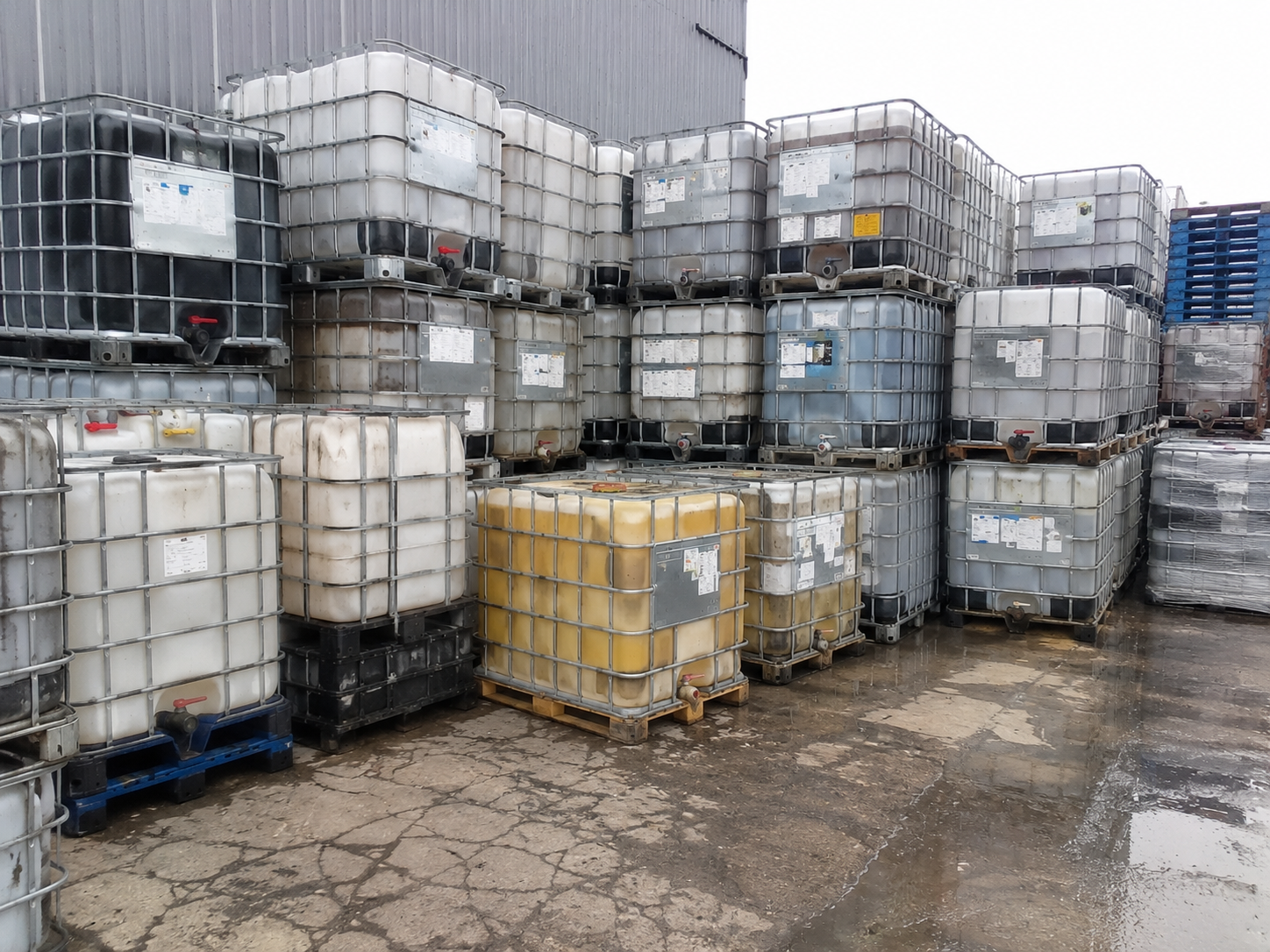
Surfactants, lubricants, base oils, glycols, mild acids and bases, polymer additives. The largest single category of reconditioned-IBC demand. Wash-grade and Reconditioned-grade tanks dominate.
Liquid fertilizers (UAN, ammonium thiosulfate), micronutrient blends, soil conditioners, biostimulants. Heavy spring shipping season; closed-loop programs common.
Syrups, juices, oils, concentrates, sweeteners. Food-Grade or new IBCs only. We document prior-contents history rigorously for this segment.
Concentrate detergents, sanitizers, alkaline degreasers. High recurring volume; fits well with closed-loop programs.
Polymers (cationic, anionic), coagulants, dechlorinators, neutralizers. New tanks specified for hypochlorite and certain peroxide products; reconditioned for the rest.
Solvent storage (usually metal totes), post-extraction crude storage, finished oils. A rapidly growing segment with specific compliance overlays.
Concrete admixtures, latex, water-based coatings, release agents. Variable volume; LTL-friendly.
Drilling fluid additives, completion chemistry, biocides. Often hazmat-classed — UN-requalified tanks required.
Surfactant blends, fragrance carriers, glycerin. Reconditioned and food-grade tanks; sometimes new for premium product lines.
Almost always new IBCs, typically with food-grade or pharma-grade specifications. Not our largest segment, but one we serve from new-stock inventory.
Bottle-Tight totes are popular for rainwater capture, vehicle washing, and off-grid water storage. Lowest-cost grade; not for human consumption.
Surfactants, lubricants, glycols, mild acids and bases. A typical customer in this segment moves a hundred to several hundred tanks a month, runs a wash-grade or reconditioned-grade default specification, and has been buying reused tanks for long enough that the operations team does not consider it remarkable. Closed-loop programs are common above the 200-tank-per-month threshold.
What customers in this segment typically optimize for: reliability of supply, consistency of grade, freight efficiency, and documented carbon impact for their sustainability reporting. Price is a factor but rarely the decisive one — at the volumes involved, a 5% per-unit price difference is dwarfed by a single bad delivery.
Liquid fertilizer (UAN, ATS, micronutrients) demand concentrates in a six-to-eight-week window in spring and a shorter window in fall. Tanks ship from blenders to retail cooperatives and end-grower customers; the empties return on a 90-day lag.
The seasonal flow shapes how we serve this segment: pool inventory builds through January and February in anticipation of demand, with reverse-logistics consolidation ramping in May and June as the empties come back. The lag between forward shipment and empty recovery is one of the longer cycles we manage and requires careful pool sizing.
Syrups, juice concentrates, edible oils, sweeteners. The product is straightforward chemistry; the procurement burden is documentation. Food-grade customers want a provable chain of custody for the tank: prior contents documented as food-grade, wash protocol verified to food-contact standards, gasket materials certified.
A growing share of food and beverage customers are now formally tracking their packaging carbon footprint and find that food-grade reconditioned tanks are a meaningful contributor to their sustainability story. We provide lot documentation packages calibrated to FSMA and major audit programs.
Concentrate detergents, sanitizers, alkaline degreasers. Demand is steady (no significant seasonality), and the customer base ranges from regional cleaning companies to multinational manufacturers. This is the segment where closed-loop programs first proliferated and where we built our first major program in 2018.
Coagulants (alum, ferric chloride), polymer flocculants, dechlorinators (sodium bisulfite). Service segment is mostly municipal and industrial water-plant operators. The chemistry is consistent year-over-year, demand is predictable, and tanks see relatively long fill-cycle dwell at the customer site (sometimes months).
Solvent storage (almost always metal totes) and post-extraction crude storage. A growing segment in states where extraction is legal, with specific compliance overlays that vary by jurisdiction. We work with the relevant state regulators to ensure documentation supports both DEA (where applicable) and state cannabis-control board requirements.
Concrete admixtures, water-based latex coatings, release agents, mortar additives. Variable demand with construction-season peaks. Lower per-customer volume than industrial chemistry; more likely to be transactional than closed-loop.
Drilling fluid additives, completion chemistry, biocides. Often hazmat-classed, with oil-and-gas service company customers operating in regions where direct-truckload freight is the only economic option. UN-requalified reconditioned tanks are consistently specified.
Surfactant blends, glycerin, propylene glycol, fragrance carriers, plant oils. The chemistry is mild but the brand sensitivity is high. Customers in this segment often have spec language that pre-dates the modern reconditioning industry and requires some education before reused units are accepted — but once accepted, the savings and carbon impact are meaningful.
A narrow but durable segment of new-tank demand. cGMP requirements and customer audit programs in pharma and infant nutrition specifically require new containers of record. We serve these customers from our new-stock inventory and from special-order channels for pharma-grade resins.
The smallest segment by volume but one of the most enthusiastic by customer engagement. Bottle Tight grade tanks for rainwater capture installations, vehicle wash water storage, off-grid water systems, and similar uses. Not for potable water without additional treatment.
A note on a gap in our industry coverage that we are working to close: smaller industrial buyers — operations of 50 employees or fewer running 5 to 20 tanks a month — often do not get the attention from larger reconditioners that their use case deserves. The order economics on small-quantity transactional shipments are thin; many operators discourage these inquiries.
We try to be different. Small-volume buyers get the same one-business-day response, the same grade-card discipline, and the same lot documentation as large customers. The freight per unit is higher (geometry, not policy) but the relationship is the same. If you are a small operation and have been told you are too small for serious IBC procurement, talk to us.