01
Home
A standalone page — no sub-sections.
If your operation generates 200+ empty IBCs a month, a custom closed-loop program is almost always cheaper, simpler, and greener than transactional buy/sell.
Tell us what you need or what you have. We respond within one business day, every business day.
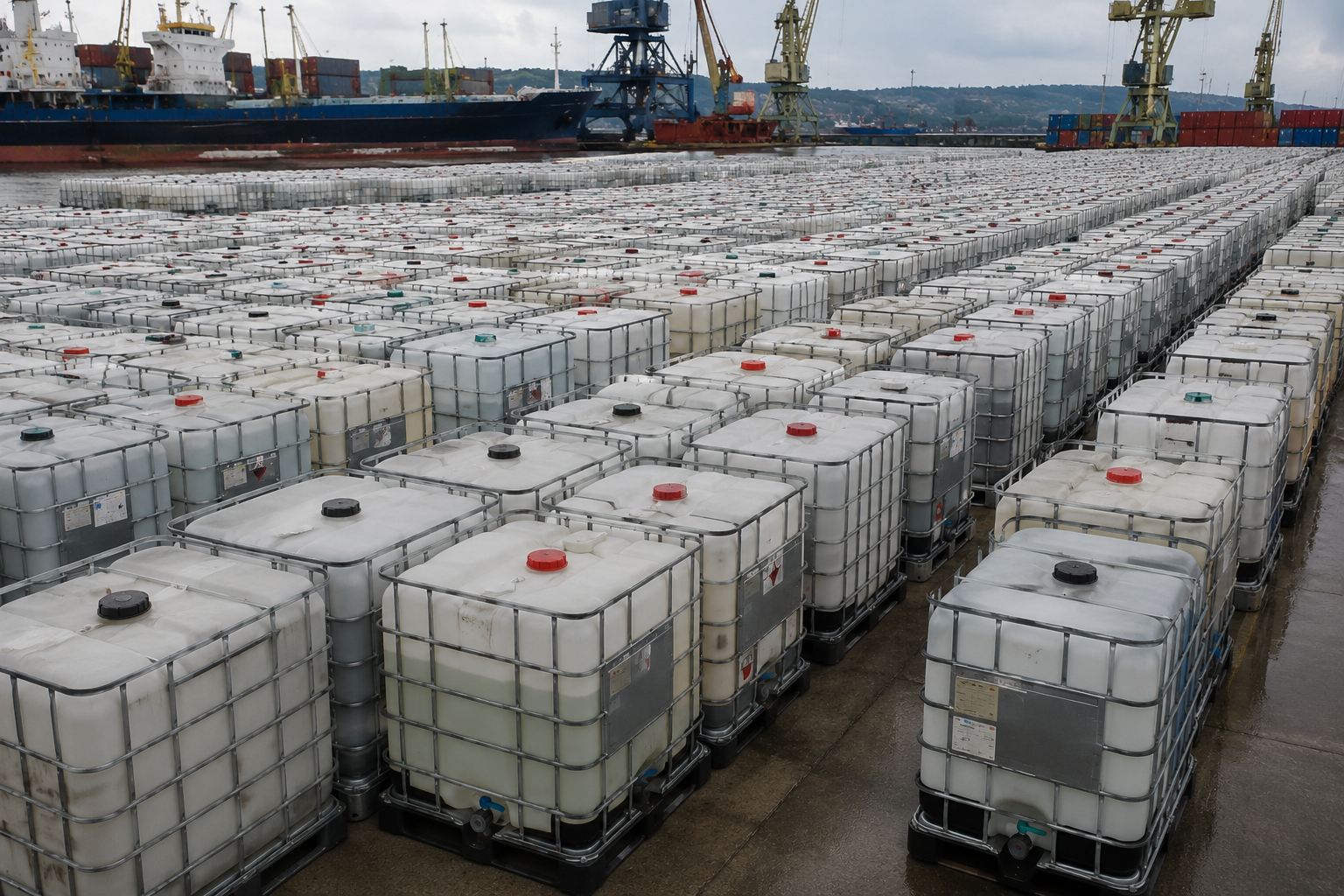
You produce in bulk. You ship to fillers, distributors, or end customers. Empties come back — sometimes to you, sometimes scattered across the country. A closed-loop program puts a single accountable partner (us) in charge of the return logistics, reconditioning, and re-supply of usable totes, on a cadence that matches your production schedule.
For most generators above the 200-units-per-month threshold, a closed-loop program cuts total packaging cost by 30–45% versus buying new and lands a clean audit-grade number for the sustainability section of the annual report. We'll model the actual economics for your volume during the scoping conversation.
Use the form above (or any form on the site) with a note in the message field describing your monthly empty-tote count and your top three return locations. We'll come back with a proposed program structure and rough economics inside 3–5 business days.
The first 30 minutes of a custom program conversation is mostly us asking questions. The answers shape the program structure significantly, so the more you can come prepared with these, the faster we can produce a meaningful proposal.
For each closed-loop program, a standard monthly report contains:
Customers can run their programs against unbranded reconditioned tanks (cheapest, fastest to launch) or branded dedicated fleets (more visible to downstream customers, higher up-front investment).
What is the minimum program size? Practically, 200 tanks/month sustained throughput is the floor where the economics meaningfully beat transactional buying. Below that, transactional purchases against a long-running relationship are usually the better fit.
What is the typical contract term? Three years initial, with annual renewal. Termination provisions are reasonable for both parties.
Can we incorporate a sustainability bonus or incentive structure? Yes — some customers tie pricing to recovery rate or cycle-time targets. Mutually agreed at contract signing.
What happens to tanks that drift out of the program (lost, broken, etc)? Reasonable shrinkage is built into pool sizing; significant or unusual shrinkage triggers a program review.
Can we replicate the program at multiple production sites? Yes — multi-site programs are common. The geographic distribution actually improves the consolidation math.
Monthly throughput: 1,000 tanks. Annual savings against buy-new baseline: $1.7M. Annual carbon impact: 290 metric tons CO₂e avoided. Program launched 2018; still running through 2024. Read the longer version on the blog.
Twelve member utilities, combined monthly throughput of 220 tanks. Master-agreement structure with consolidated reverse-logistics on bi-weekly schedule. Annual savings: ~$160K vs. prior individual procurement. Program launched 2021. Long-form on the blog.
Food-grade reconditioning program with branded sticker labeling and dedicated food-grade reconditioning line. Monthly throughput: 380 tanks. Annual savings: ~$420K. Most-meaningful operational change: simplified audit reporting that replaced a quarterly customer audit cycle with a documented continuous-monitoring process. Program launched 2022.