01
Home
A standalone page — no sub-sections.
Scranton sits within our multiple times per week lane network through Pennsylvania. Tanks reach Scranton ZIP codes within 3–5 business days of pickup from our Dublin, Ohio yard. Consolidated freight keeps per-tote freight cost and carbon footprint substantially below direct-truck rates.
Tell us what you need or what you have. We respond within one business day, every business day.
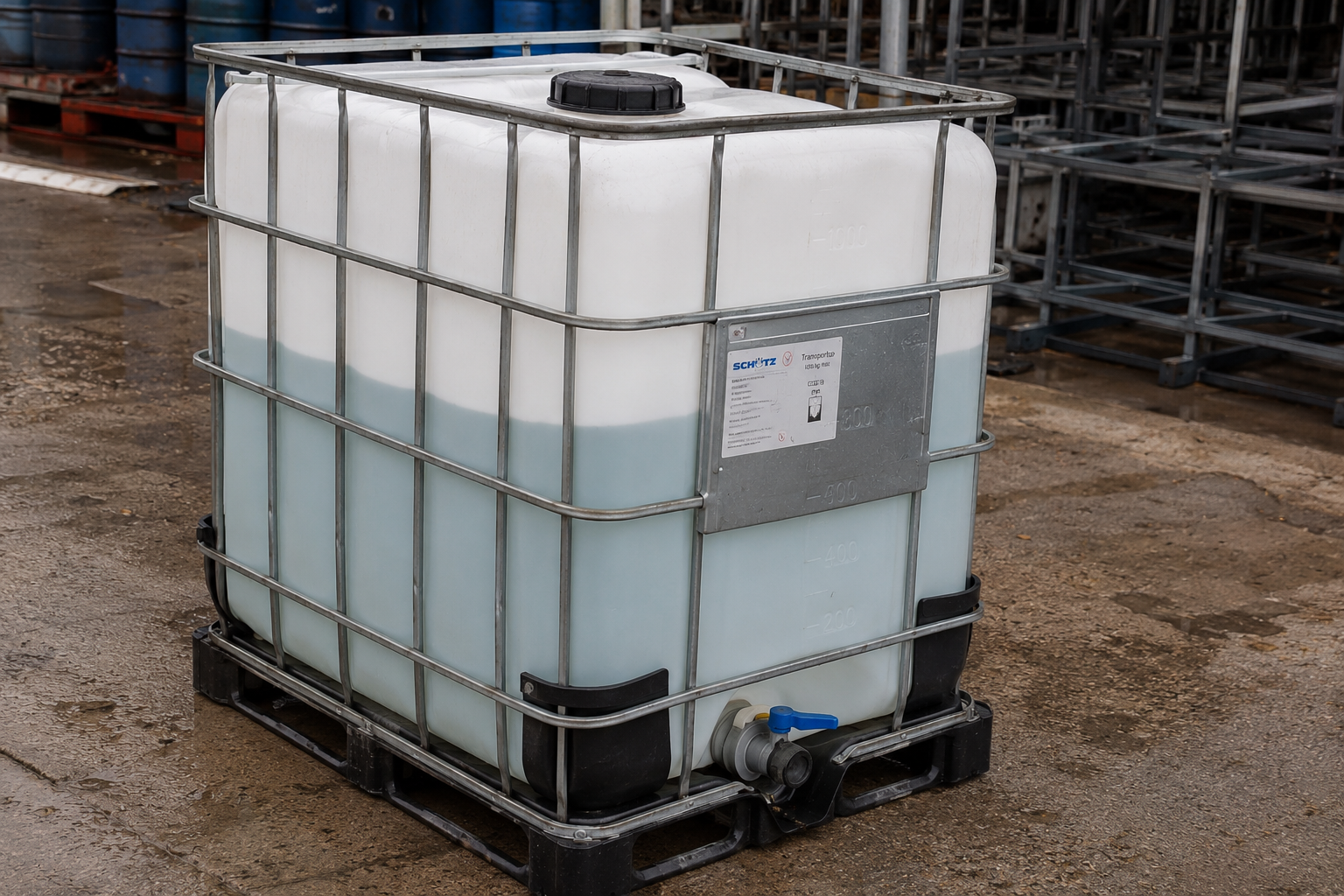
Scranton is one of 8 cities in Pennsylvania we ship to on consolidated freight. For Scranton customers, we operate all six standard service lines: buying reconditioned tanks, selling empty totes back, end-of-life recycling, reconditioning of customer-owned fleets, transport and logistics, and custom closed-loop programs.
Scranton-area customers we work with typically operate in the following segments:
Most Scranton buyers start with a transactional order — typically a single pallet or a partial truckload of reconditioned 275 or 330 gallon units — and gradually move into recurring orders or closed-loop programs as their volume justifies the structure.
Our flagship product. Reconditioned 275 and 330 gallon HDPE totes, washed and UN-requalified per 49 CFR § 178.801, with full lot documentation. Most Scranton industrial chemistry runs perfectly in reconditioned tanks — at roughly one-third the per-unit cost of new and one-tenth the embodied carbon.
For applications where reconditioned will not work — certain pharma and infant nutrition requirements, specific water-treatment chemistry, customer specs that explicitly require new — we ship new units on the same lanes. Slightly longer lead times for specialty resins; same freight efficiency.
Stainless and carbon-steel caged totes for solvents, low-flash chemistry, and other products HDPE cannot handle. Scranton customers in the energy services, semiconductor, and high-purity chemistry segments often need these.
If you have accumulating empty IBC totes on a Scranton dock, we will quote a buyback, schedule the pickup on our existing lanes through Pennsylvania, and pay on receipt at our Dublin facility.
Per-tote pricing depends on bottle and cage condition, prior contents documentation, and pickup logistics. Most clean reconditionable 275-gallon totes from Scranton land in the $30–$60 per tote range, with food-grade documented units paying higher. We send a written quote within one business day of inquiry.
Tanks that previously held PCBs, certain restricted-use pesticides, certain pharmaceuticals on our exclusion list, or any product that cannot be documented at intake. When in doubt about a load, attach the SDS to your inquiry and we will confirm in writing whether we can take the pickup.
Every empty-tote pickup from Scranton generates a diversion certificate quantifying the HDPE diverted from landfill. Scranton customers running corporate sustainability reporting can drop these certificates directly into EPA WARM-aligned disclosures.
For Scranton manufacturers running 200+ tanks per month sustained, a custom closed-loop program almost always beats transactional purchasing on cost and carbon.
Most Scranton closed-loop programs deliver 30–45% total packaging cost reduction against an equivalent all-new baseline, with carbon footprint at roughly 10% of new-unit baseline. Program rollout typically runs 4–8 months from initial scoping to full operation.
Scranton is part of the Scranton MSA metro area, which typically sees high volumes of consolidated industrial freight, making lane utilization for our trucks excellent and per-tote freight cost competitive.
Scranton operates under Pennsylvania state environmental regulations layered over federal 49 CFR for hazmat IBC shipping. Most Scranton industrial operations are already in compliance with standard tote handling protocols; the typical questions are around secondary containment for stored hazmat chemistry (EPA RCRA, SPCC for petroleum oils) and state-specific air-emissions rules for wash and cleaning operations.
Across our Pennsylvania customer base, the same patterns come up. Scranton customers in particular tend to value three things about the relationship.
Every tank from our Dublin yard has been graded against the same rubric. A reconditioned 275 that arrives at a Scranton dock today is functionally identical to one shipped to a customer in a different state last week. For multi-site Scranton operations, that consistency simplifies operations and audit reporting.
Scranton is on our multiple times per week lane. That means consolidation — your shipment shares a trailer with other freight headed in the same direction. Lower freight cost, lower carbon per tote, and reliable delivery windows that do not depend on the spot truckload market.
Our top 25 customers have been with us for an average of 6.8 years. We do not advertise, and our growth in Pennsylvania has come from referrals inside the industries we serve. The Scranton customers who come to us through referral tend to stay for the same reasons their referrer did: same-day inquiries, written quotes within a business day, lot documentation that holds up to audit, and zero phone tree.
How long does it take to deliver to Scranton? Standard reconditioned stock typically ships within 3–5 business days of order acceptance. Specialty grades may add 5–10 business days.
What is the cheapest grade of IBC available in Scranton? Bottle Tight — visually inspected, leak-tested, not washed. Suitable only for non-regulated applications like rainwater capture or non-critical storage.
Are reconditioned IBCs accepted by Pennsylvania insurance carriers? Yes, almost always. UN-requalified reconditioned tanks are legally equivalent to new units for hazmat duty, and insurance carriers treat them the same.
Can I get IBCs delivered to Scranton same-week? For standard stock, often yes — depending on your ZIP within PA and the consolidation lane schedule. For urgent needs, ask about direct truckload routing.
Do you handle pickups in Scranton? Yes. Empty tote pickups in Scranton run on the same lanes as deliveries, typically scheduling within 5–10 business days of inquiry.
What sustainability reporting can I get for Scranton shipments? Diversion certificates per shipment for transactional customers; monthly aggregated reporting for closed-loop program customers. Methodology aligns with EPA WARM v15.
Do you sell new IBCs in Scranton? Yes — for applications where reused will not work. Pharma, certain water-treatment chemistry, and customer-specified new-only specs.
What is the largest closed-loop program you could run in Scranton? Our largest current program runs 2,100 tanks in a single pool. We have capacity to scale closed-loop programs to 5,000+ tanks per pool for a single customer.